Photographing a blockchain summit: stage and booth coverage together
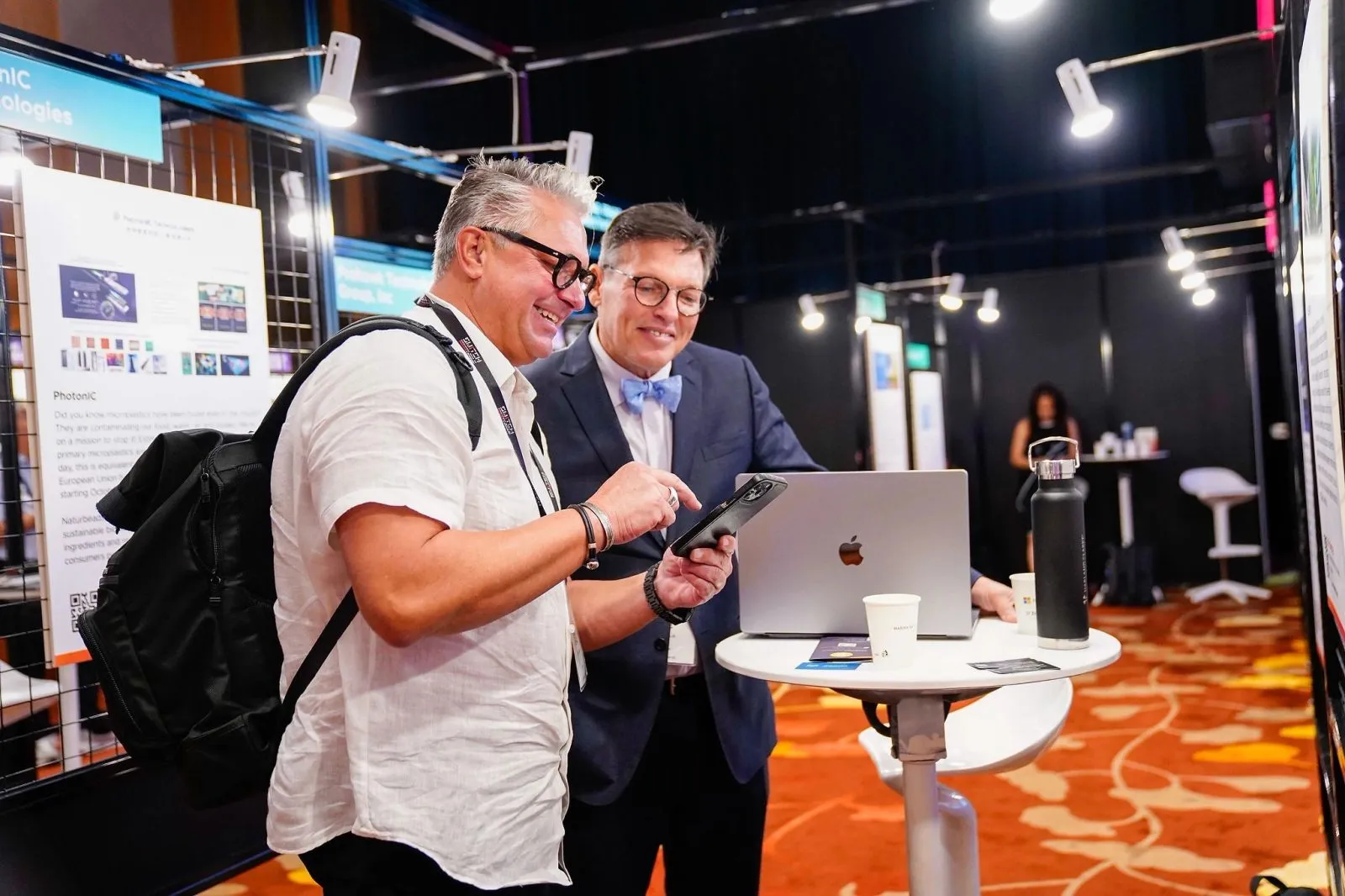
A blockchain or web3 summit typically needs coverage split between formal stage sessions and the sponsor booth and networking floor, and whether one photographer manages both or a second is added depends on how much is happening at the same time and how many exhibitors expect their own coverage.
Key takeaways
- Stage sessions and booth activity usually compete for attention at the same time, so priorities need setting in advance.
- One photographer can cover both if the programme has natural gaps between panels for floor coverage.
- A second photographer is worth adding when sponsor booths are a paid deliverable the organiser owes exhibitors.
- Briefing should state which stage moments are non-negotiable and which booth visits are flexible.
- Same-day delivery matters more than usual here, since crypto and web3 audiences are highly active on social media throughout the event.
Covering formal stage sessions across the programme
The stage programme at a blockchain or crypto summit usually runs as a series of panels, fireside chats and keynotes, often across a full day. This is the most predictable part of the event to plan coverage for, since the run sheet gives clear timing and the photographer can plan positioning around each speaker change and any product reveal moments on stage. Multiple concurrent tracks are also common at larger summits, which adds another layer to the planning and often means treating each track closer to its own mini-conference.
Where this differs from a typical conference booking is pacing. Web3 events often move quickly between sessions with minimal breaks, so the photographer needs to be ready to reposition fast rather than having a relaxed gap to reset between segments before the next speaker takes the stage and the audience settles back in.
Covering sponsor booths and casual networking areas
Alongside the stage programme, most summits have an exhibition or sponsor floor running in parallel, project booths, demo stations, informal conversations between founders and investors. This is where a lot of the commercially useful photography happens, since sponsors and exhibitors often expect their booth activity documented as part of what they paid for, and these images tend to get reused in follow-up marketing long after the event itself.
The challenge is that this floor activity happens continuously, not in a scheduled block, which means it competes directly with stage coverage for the same photographer's attention if only one is booked, and there is no obvious point where the floor pauses to be covered.
Deciding whether one photographer covers both or two are needed
One photographer can reasonably cover both if the stage programme has natural breaks, between panels, during a networking lunch, where the floor can be prioritised without missing a key stage moment. This works well for a single-stage, single-day summit with a moderate booth count and a programme that is not too tightly packed.
A second photographer becomes the more sensible option when sponsor booth photography is itself a deliverable the organiser has promised exhibitors, since stage coverage and booth coverage then both need dedicated attention rather than one person splitting focus between two competing priorities. This mirrors the general guideline of sizing crew to concurrent activity rather than just event duration.
Briefing the split between stage and booth priorities
The brief should state clearly which stage moments cannot be missed, a keynote, a headline panel, and which booth visits are flexible enough to fit around them. Without this, a photographer working solo has to make judgment calls in real time about what to prioritise, which is harder to get right than a clear brief agreed in advance with the organiser's own priorities already in mind.
If exhibitor booth photos are a resold deliverable, it also helps to know roughly how many booths need covering and whether there is a preferred order, so the floor time is used efficiently rather than covered at random depending on which booth happens to be nearest at the time.
Delivery expectations for a fast-moving audience
Web3 and crypto audiences tend to be highly active on social platforms during and immediately after an event, which makes fast delivery more valuable here than for a typical corporate booking. EXPRESS 24 coverage, edited selects within the hour and a full gallery within 24 hours, suits this pace well, letting sponsors and organisers post from the show floor while the conversation is still live rather than waiting until the following week.
This is worth flagging at the briefing stage if same-day social content is a priority, since it affects how the photographer paces editing across the day rather than saving everything for a single post-event batch delivered once the summit has already wrapped.
Questions organisers ask
Can one photographer realistically cover both the stage and the booths?
Yes, for a single-stage summit with natural gaps between sessions, one photographer can usually manage both if the priorities are briefed clearly in advance. It becomes harder without a clear brief, since the photographer has to guess what matters most in the moment rather than working from an agreed plan.
When is a second photographer recommended for a summit this size?
When sponsor booth photography is itself a promised deliverable to exhibitors, or when the stage and floor both run continuously with no natural breaks. In these cases, splitting coverage between two photographers avoids either area being under-served across the day.
How is delivery handled for social-active audiences like web3 and crypto events?
A same-day option covering edited selects within the hour and a full gallery within 24 hours works well for this kind of event, since attendees and sponsors are often posting during the show itself rather than after it has finished.
Should booth coverage be scheduled or left flexible?
A rough order or priority list helps, especially if there are many booths. Fully unscheduled floor time works for smaller shows, but a clear priority list makes better use of limited coverage time on a larger floor with many competing exhibitors.
Planning photography for a blockchain, crypto or web3 event in Singapore? Send us your programme, booth count and any delivery deadlines, and we will help you scope the right crew size. See our conference photography coverage.
Related reading: Conference Photography Singapore · Exhibition & Trade Show Photography Singapore · EXPRESS 24™ — Same-Day Event Photos & Video, Singapore.
More guides: Splitting coverage between demo booths and the stage at a 5G summit.
Let's talk
Planning an event in Singapore?
Send us the date, venue and programme. You will get a considered production plan and a fixed nett quote.