Booking a booth video loop for your exhibition screen
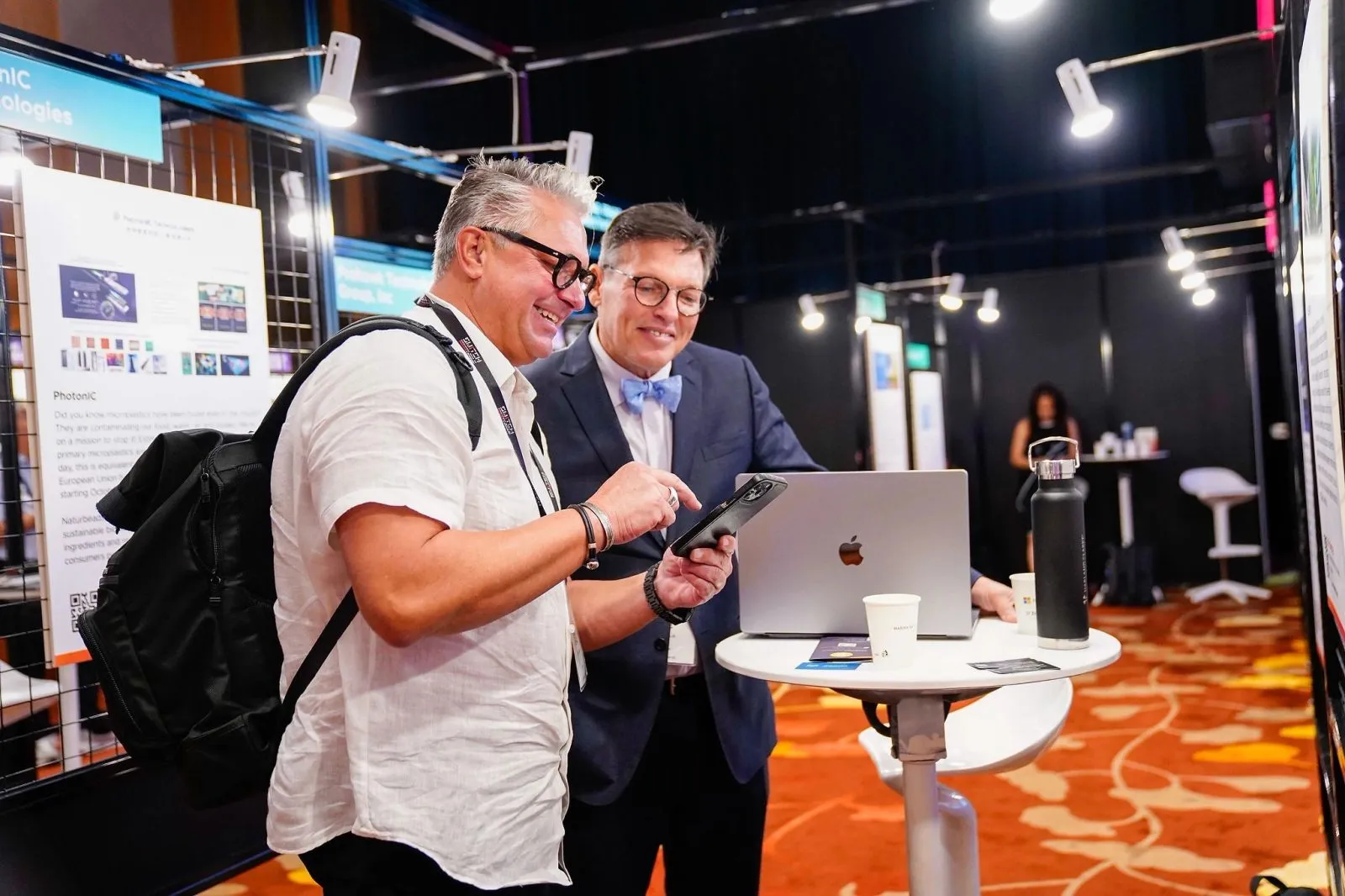
A booth video loop is a short highlight video, edited to play on repeat on a booth screen, usually built from footage shot earlier in the show or from a standalone shoot booked ahead of the event, and it can be bundled into a sponsorship package or booked on its own.
Key takeaways
- A booth loop is typically short and built to run unattended on repeat, not a full-length corporate video
- It can be bundled into a sponsorship tier or booked as a standalone add-on for an exhibitor
- Turnaround depends on whether footage comes from the show itself or an earlier shoot
- Screen orientation and playback setup should be confirmed with the booth contractor before filming
- Coordinating with the booth build team avoids a mismatch between the video and the screen it is meant for
What a looping booth video typically shows
A booth video loop is usually a short, repeating piece designed to catch attention from a few metres away as visitors pass a booth, rather than a full corporate video meant to be watched start to finish. It might show product shots, brief clips of the booth team in action, or highlights from the show floor itself, cut to run in a tight loop that makes sense whether someone catches the start or walks up midway through. This is different from a standalone corporate video, which is built with a beginning, middle and end for a seated or attentive viewer. A booth loop needs to work as ambient, glanceable content, which changes how it is shot and edited from the outset. If the footage is being pulled from coverage of the show itself, this should be planned with the crew in advance so the right shots are captured with the loop in mind, not selected afterwards from footage shot for another purpose.
Bundling this into a sponsorship package versus booking standalone
Whether a booth loop is bundled into a sponsorship package or booked separately depends on how the organiser structures its offering. Some organisers include a basic loop as part of a higher sponsorship tier, using footage gathered during the show itself, while individual exhibitors who want something more specific to their own booth or product often book it as a standalone add-on. The standalone route gives more control over what the video shows, since it can be planned around a particular product demo, booth activity, or message the exhibitor wants repeated, rather than drawing from general show coverage. Either way, it is worth clarifying early which route applies, since a bundled loop built from general footage will look different from one filmed specifically for a single exhibitor's booth, and exhibitors comparing notes on the show floor tend to notice the difference.
Turnaround needed to have it ready during the show
Turnaround depends heavily on where the footage comes from. A loop built from footage shot on the first day or two of a multi-day show can realistically be ready for later days if the crew and editor know in advance that a booth loop is expected, similar to how nightly highlight batches work under EXPRESS 24 style same-day turnaround. A loop built from a standalone shoot, filmed specifically for one exhibitor's booth ahead of the event, needs to be planned against the show's opening date rather than assembled at the last minute. Either way, the exhibitor or organiser should confirm the target date the loop needs to be running by, and flag it clearly as a video deliverable rather than an assumption bundled somewhere inside general photography coverage, so the right crew and editing time are set aside for it.
Formats that work for common booth screen setups
Booth screens vary a lot between shows and stand builders, from a portrait-oriented display built into a wall panel to a landscape screen on a stand or a monitor fed from a laptop under the counter. Rather than assuming a standard format, it is worth confirming with the booth contractor or AV team early what orientation the screen uses, how the video will be played, whether from a USB drive, a media player, or a laptop, and whether there is sound or the loop needs to work silently with captions. This detail matters more than it sounds: a video edited for a landscape screen looks cropped and awkward on a portrait panel, and reshaping it after the fact rarely looks as good as planning the orientation from the start. Passing this information to the video crew before filming avoids a mismatch discovered only once the booth is built.
Coordinating with the booth build team
A booth video loop sits at the intersection of two different suppliers: the photography and video crew producing the content, and the booth contractor building and running the screen it plays on. Coordinating between the two, rather than treating them as separate conversations, avoids the common problem of a finished video arriving in a format the screen cannot play, or arriving after the booth build team has already left the venue. It helps to loop in the booth contractor's technical contact early, share the screen specifications with the video crew before filming or editing begins, and confirm who is physically responsible for loading the final file onto the screen once it is ready. This is a small coordination step that prevents a finished, well-made video from sitting unused because nobody confirmed how it would reach the screen.
Questions organisers ask
Is a booth video loop bundled with sponsorship or booked separately?
It depends on the organiser. Some include a basic loop built from general show footage within a higher sponsorship tier, while exhibitors wanting something specific to their own booth or product usually book it as a standalone add-on planned ahead of the show.
How fast can a loop video be ready during a multi-day show?
This depends on where the footage comes from. Footage gathered during the show itself can be turned around within the show's own delivery windows if the crew knows in advance a loop is expected, while a standalone shoot needs to be planned and filmed ahead of the opening date.
Does the booth need sound for the video, or can it run silently?
Either can work, and it should be decided based on how the booth is laid out and how close visitors typically stand. A busy show floor often favours a silent loop with on-screen captions, but this is worth confirming with the booth team rather than assuming.
Who is responsible for getting the finished video onto the booth screen?
This should be agreed between the organiser, exhibitor and booth contractor before the show, since the video crew producing the file is not always the one physically loading it. Confirming this early avoids a finished video sitting unused because nobody was assigned the final step.
If you need a video ready to loop on a booth screen, plan the footage, format and handover with your crew before the show opens. See how exhibition coverage works and get in touch to plan yours.
Related reading: Corporate Video Production Singapore · Exhibition & Trade Show Photography Singapore · EXPRESS 24™ — Same-Day Event Photos & Video, Singapore.
More guides: Producing a looping product video for your exhibition booth screen · Exhibition booth photography in Singapore: an exhibitor's guide · Exhibition photography at Changi Exhibition Centre: what to know.
Let's talk
Planning an event in Singapore?
Send us the date, venue and programme. You will get a considered production plan and a fixed nett quote.