Planning co-branded photo content between organiser and sponsor
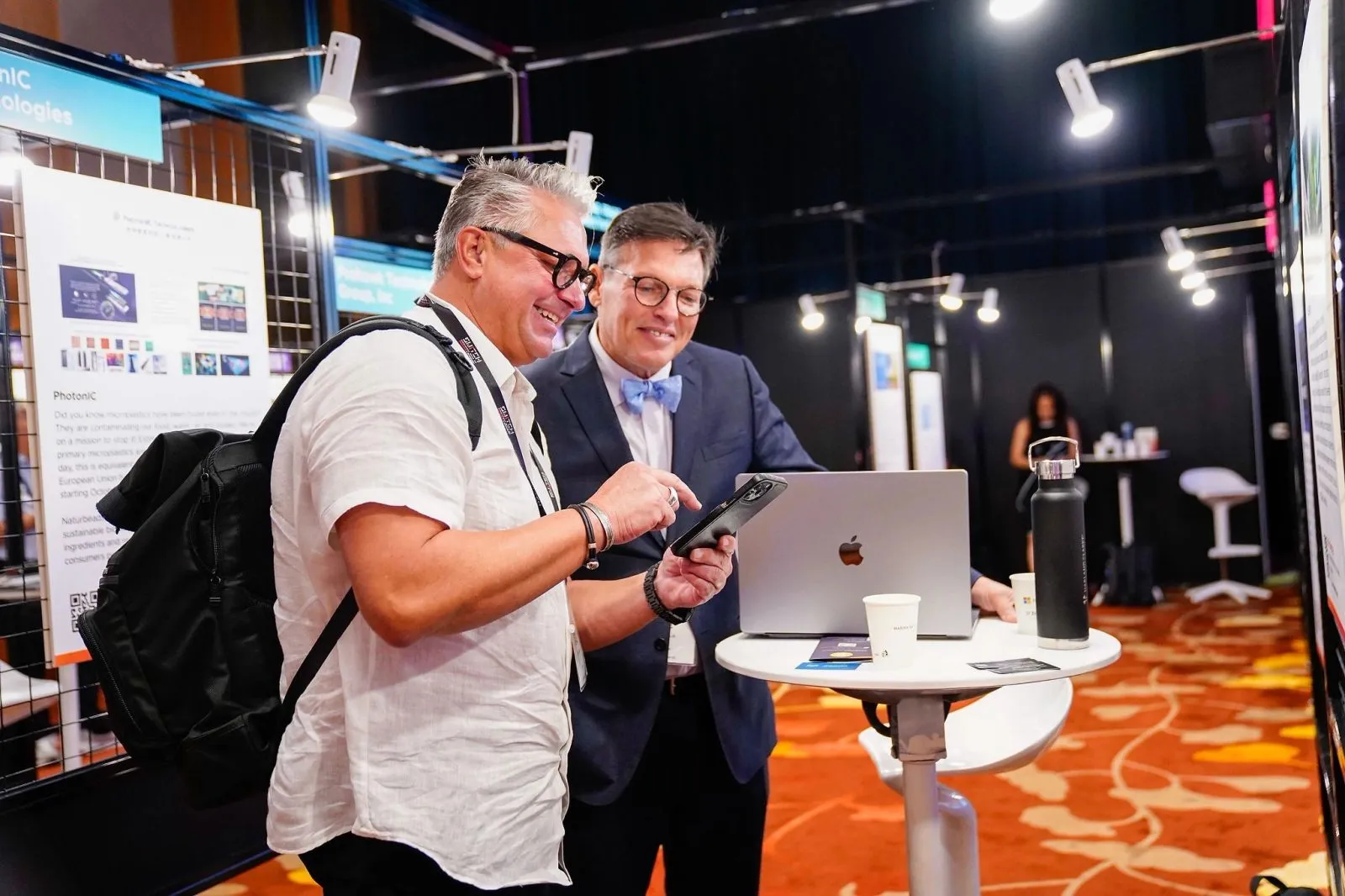
Co-branded photo content needs a shot list that deliberately covers both the organiser's own branding and each sponsor's presence, agreed before the event rather than assembled afterwards from whatever the crew happened to capture.
Key takeaways
- Co-branded content needs planning before the event, not a reshuffle of leftover images afterwards
- The shot list should name specific sponsor branding moments alongside organiser branding
- Balance means each sponsor is represented fairly relative to their sponsorship tier, not identically
- A review step before wider distribution catches one-sided content early
- Sharing the shot list with sponsors in advance reduces disputes after the event
Why co-branded content needs deliberate planning
Co-branded photo content, where an organiser's own branding and one or more sponsors' branding both need to appear fairly, rarely happens by accident. A crew covering a conference or exhibition without specific instructions will naturally photograph what is visually interesting in the moment, such as the main stage, the keynote speaker, or the busiest booth, which may not match what the organiser has promised each sponsor in writing. If a platinum sponsor was promised visible coverage of their branded backdrop and a gold sponsor was promised booth shots, that needs to be built into the shot list rather than left to chance on the day. Without this planning, an organiser risks ending up with content that is heavy on one sponsor and thin on another, purely because of where the action happened to be, not because of what was agreed in the sponsorship contract.
Balancing organiser and sponsor branding in the shot list
A shot list built for co-branded content should name specific moments and locations, not just general instructions to cover sponsors. This might mean a defined number of frames at each sponsor's branded backdrop, a shot of the sponsor's logo on the main stage screen during their allotted segment, or coverage of a sponsor-hosted session alongside the organiser's own opening and closing moments. Balance does not mean treating every sponsor identically. A platinum sponsor with a larger footprint reasonably expects more coverage than a smaller tier, and the shot list should reflect the tiers agreed in the sponsorship contract rather than an arbitrary even split. What matters is that the split is deliberate and matches what was promised, not that every sponsor receives the exact same number of frames regardless of what they paid for.
Avoiding content that reads as one-sided
Content can look one-sided even when the intent was fair, usually because of small details rather than an obvious imbalance. A gallery where the organiser's own logo appears in every wide shot but a sponsor's branded pillar only appears once, blurred in the background, reads as unbalanced even if nobody planned it that way. It helps to think about co-branded content the way a sponsor's own marketing team will look at it afterwards: are there enough clean, usable frames of their branding to justify what they paid for, or does their presence look like an afterthought next to the organiser's own materials? Briefing the crew on this specifically, rather than assuming general event coverage will naturally capture it, is the most reliable way to avoid a gallery that quietly favours the organiser over the sponsors who funded part of the event.
Reviewing selects before wider distribution
A review step before content goes out to sponsors or the wider public catches imbalance early, while there is still time to fix it. This means someone on the organiser's side looking through the delivered gallery against the shot list and the sponsorship commitments, not assuming the crew captured everything correctly by default. If a particular sponsor's coverage looks thin, it is worth checking whether more usable frames exist in the full gallery before assuming none were taken. This review also catches the opposite problem, where a sponsor's branding appears prominently in a shot that also captures something the organiser would rather not publicise, such as an empty seating section or a technical issue on stage. A short review pass before wider distribution is a small step that prevents a much larger conversation with a sponsor after the fact.
Sharing the shot list with sponsors in advance
Sharing the relevant parts of the shot list with sponsors before the event, rather than only with the photography crew, sets expectations on both sides. A sponsor who knows in advance roughly what coverage they will receive is less likely to be disappointed after the event, and more likely to flag early if something important, such as a product they specifically want photographed, was left off the plan. This does not need to be the full production shot list handed to every sponsor. A short summary of what their tier includes, drawn from the same document the crew is working from, is usually enough. It also gives the organiser a clear reference point if a sponsor later asks for more than was originally agreed, since the shared shot list becomes the record both sides can point back to.
Questions organisers ask
How is fair branding balance planned into the shot list?
By naming specific moments and locations for each sponsor in the shot list, such as branded backdrops, stage screen credits, or booth coverage, rather than leaving sponsor coverage to whatever the crew happens to capture during general event photography.
Who reviews co-branded content before it's shared publicly?
This is usually someone on the organiser's side, checking the delivered gallery against the shot list and the sponsorship commitments before wider distribution. This catches gaps or imbalance while there is still time to pull additional usable frames from the full gallery.
Does every sponsor need the exact same number of photos?
No, balance should reflect the sponsorship tiers agreed in the contract rather than an identical split across all sponsors. A larger sponsorship reasonably comes with more coverage, as long as the split is deliberate and matches what was promised.
Should sponsors see the shot list before the event?
A short summary of what their own tier includes is worth sharing in advance, even if the full production shot list stays with the organiser and crew. This sets expectations early and gives both sides a shared reference if questions come up afterwards.
If you are coordinating photography across several sponsors, build their coverage into the shot list before the event rather than after. Get in touch to plan a brief that reflects your sponsorship tiers.
Related reading: Exhibition & Trade Show Photography Singapore · Corporate Event Photography Shot List: Free SG Template · Corporate Event Photographer Singapore.
More guides: Briefing sponsor booth coverage inside a conference programme · Setting up a dedicated photo booth in your sponsor lounge · Covering staff participants and sponsor branding at a charity run.
Let's talk
Planning an event in Singapore?
Send us the date, venue and programme. You will get a considered production plan and a fixed nett quote.