Event photography at the Devan Nair Institute
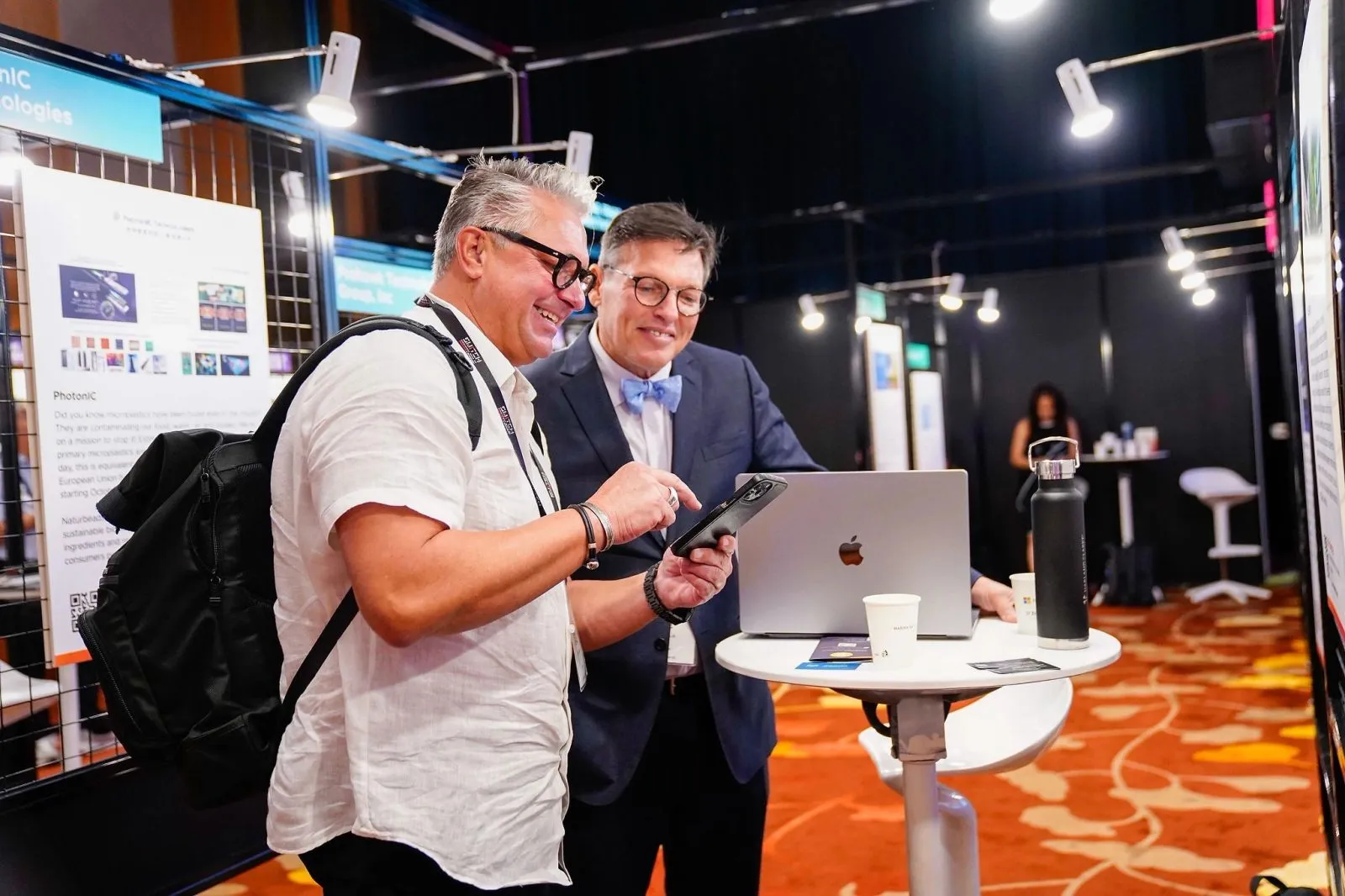
One photographer can cover a Devan Nair Institute conference that runs sessions back to back with short gaps between them, moving room to room to catch openings and key exchanges. For breakout sessions that run at the same time and all need documented coverage, plan on one photographer per room plus a roamer for registration and corridor moments.
Key takeaways
- One photographer can rotate between sequential breakout rooms; concurrent breakouts need one photographer per room plus a roamer
- A campus with multiple training and conference spaces needs a route plan, not just a room list
- Send the programme with exact session times before the day so the photographer can plan movement between rooms
- A formal delegate or committee group photo should be scheduled as its own slot, not squeezed between sessions
- Standard delivery is a full gallery within 48 hours; EXPRESS 24 gets same-day selects if the conference needs press-ready images sooner
Covering panel discussions and breakout rooms across the campus
Association and union conferences at the Devan Nair Institute usually combine a main plenary with smaller breakout or training sessions, sometimes spread across different rooms and levels on the campus. A photographer working this kind of programme needs a route between spaces, not a single fixed position for the day.
Whether one photographer can realistically cover every breakout depends entirely on the schedule. If sessions run back to back with a short gap, a single photographer can open the plenary, step into the first breakout for its key panel exchange, then rotate through the remaining rooms as timing allows. If several breakouts run at the same time and your organisation wants each one properly documented, that calls for one photographer per concurrent room plus someone free to work the corridors, registration desk and informal networking moments between sessions.
Neither approach is wrong. The choice comes down to what your committee needs photos of afterwards and how the day is timed, which is why the schedule should be settled before crew size is confirmed.
Multi-room conference coverage logistics at this venue
A training and conference campus like this one is built for exactly this kind of programme, with several rooms available for concurrent use. For a photographer, the practical questions are less about the venue's features and more about movement: how far apart are the rooms being used, is there a central corridor or lobby where delegates gather between sessions, and where does registration happen relative to the plenary hall.
None of this needs to be guessed on the day. Share the floor plan or room allocation your secretariat receives from the venue, along with the confirmed timing for each session, so the photographer can map a realistic route rather than discovering the layout as the conference starts. If sessions overrun, as they often do, a photographer working alone needs a fallback plan for which rooms take priority.
For associations running this kind of event for the first time, it helps to treat the venue's own logistics briefing and your photography brief as two separate conversations that should still agree on the same room list and timings.
Briefing a photographer for an association or union conference
Association and union conferences carry their own rhythm: committee elections, motions, guest addresses from officials, and recognition segments for long-serving members alongside the substantive panel content. A photographer who has not worked this kind of programme before will not automatically know which segments matter most to your members and which are routine agenda items.
A short written brief solves this. List the moments that must be captured without fail (the opening address, any handover of office, recognition presentations, the closing group photo) separately from the general session coverage that can be captured more loosely. Note any protocol points, such as where officials or guests of honour should be seated or photographed, and whether any part of the proceedings is not to be photographed.
This kind of brief takes an hour to put together and saves the photographer from guessing which of forty near-identical panel shots matters to your organisation once the conference is over.
Group and delegate photography considerations
Conferences run by associations and unions often close with a formal group photograph of delegates, committee members or award recipients, and this should be treated as its own scheduled item rather than an afterthought squeezed between the last session and lunch. Group photography needs a few minutes of coordination: someone to gather the right people, a location with enough space and reasonably even lighting, and a clear instruction on who stands where if seniority or office matters to your organisation.
For larger delegations, it is worth deciding in advance whether you need one large combined photo, or several smaller ones by committee, region or affiliate group. Each additional configuration adds a few minutes, which is fine if it is planned for and disruptive if it is not.
If your conference includes any private or restricted-attendance segment, such as a closed-door committee meeting, flag this clearly so the photographer knows which parts of the day are off limits.
What to send the photographer before the day
The single biggest factor in how well a multi-room conference gets covered is what the organiser sends ahead of time, not the photographer's individual skill. A useful pack includes the run sheet with session start and end times, a floor plan or room list if the venue has provided one, the names and titles of any VIPs or officials attending, and a short list of must-have shots.
Building a proper shot list before the conference means the photographer is working from your priorities rather than improvising on the day. It also gives you something concrete to check the delivered gallery against afterwards.
If your secretariat is unsure how many photographers a programme like this needs, it is worth working through how crew size is usually decided for multi-room events before finalising your booking, rather than guessing and adjusting after the fact.
Delivery timing for conference photos
Once the conference wraps, most associations want photos back quickly, both for internal circulation and for any press release or member newsletter that follows the event. Standard delivery for event photography is a full edited gallery within 48 hours of the event ending.
Where a conference needs images sooner, such as a same-day press statement or a same-day social media update to members who could not attend, EXPRESS 24 delivers edited selects within the hour while the event is still running, with the complete gallery following within 24 hours. This is worth flagging at the briefing stage rather than after the event, since it changes how the on-site editing is planned.
Either way, agree on the delivery format your secretariat needs, whether that is a shared online gallery, downloadable files, or both, before the day so there is no back and forth once the conference is over.
Venue facts your photographer needs
The Devan Nair Institute for Employment and Employability, operated by NTUC's Employment and Employability Institute (e2i), is located at 80 Jurong East St 21, Singapore 609607, near Jurong East MRT. The seven-storey building houses four event halls, training rooms, and open spaces adjoining the halls for networking or catering.
- Four event halls with a combined area of 1,157 sqm, arranged with movable partitions into up to four separate spaces
- Hall 1: 357 sqm; Hall 2: 285 sqm; Hall 3: 313 sqm; Hall 4: 202 sqm (all on Level 1)
- Halls are adjacent to one another and can collectively accommodate up to 600 guests
- Amenities include WiFi, ceiling-mounted projectors and a sound system
Source: e2i — Corporate Event Spaces: Event Halls, checked September 2026.
Questions organisers ask
Can one photographer cover multiple breakout rooms at this venue?
Yes, if the breakout sessions run one after another with short gaps, a single photographer can rotate between rooms to catch the opening and key moments of each. If several breakouts run at the same time and every room needs full coverage, plan on one photographer per concurrent room instead.
What should an association brief a photographer on before booking here?
Share the confirmed run sheet with session timings, a floor plan or room list if available, the names of any officials or guests of honour, and a short list of must-have shots such as the opening address and closing group photo.
Does the crew provide a formal group photo for delegates?
Yes, a closing group photo of delegates or committee members is a standard part of conference coverage, but it should be scheduled as its own slot with a few minutes set aside rather than fitted in between other agenda items.
How soon after the conference can we expect edited photos?
Standard delivery is a full edited gallery within 48 hours of the event. If your conference needs same-day images for a press release or member update, EXPRESS 24 provides edited selects within the hour and the full gallery within 24 hours.
If your association or union is planning a conference at the Devan Nair Institute or a similar multi-room campus, start with the programme and room list rather than the crew size. Our conference photography team can work through the run sheet with you and confirm how many photographers the day needs.
Related reading: Conference Photography Singapore · How Many Photographers Does Your Conference Need? · Corporate Event Photography Shot List: Free SG Template.
More guides: Event photography at the Lifelong Learning Institute.
Let's talk
Planning an event in Singapore?
Send us the date, venue and programme. You will get a considered production plan and a fixed nett quote.