Briefing exhibitor booth photography that works for LinkedIn
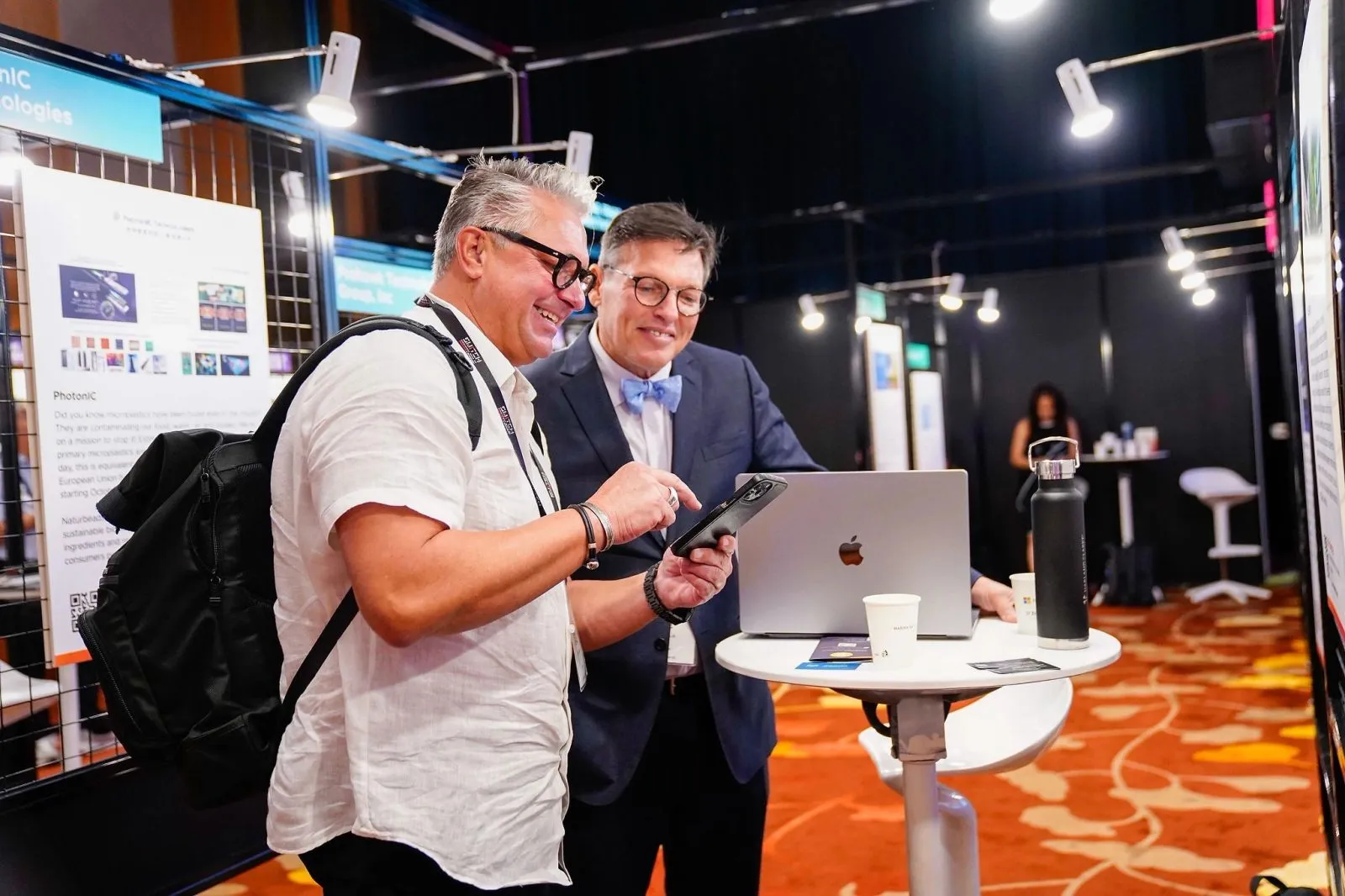
Booth photography that works on LinkedIn is framed tighter, includes people and reactions rather than only product shots, and needs a fast turnaround, brief this shot list and delivery expectation separately from your general exhibition coverage.
Key takeaways
- A documentation-style wide shot rarely performs as well on LinkedIn as a tighter, people-focused frame.
- Balance product and booth shots with genuine engagement moments, a handshake, a demo reaction, a full room.
- Brief captions in mind so images pair naturally with the copy your team plans to post.
- EXPRESS 24 delivers selects within the hour and a same-day social pack, useful for posting while the show runs.
Why general documentation shots don't always work for LinkedIn
Standard exhibition photography is built to document the event comprehensively, a record of every angle of the booth, every visitor interaction, every banner and signage placement. That completeness matters for a post-show report, but it rarely translates into strong LinkedIn content on its own. A wide shot showing the whole booth with a few visitors scattered around often reads as flat on a social feed, it lacks a clear subject and gets scrolled past.
LinkedIn content tends to perform better with a tighter frame around one clear moment, a conversation at the booth, a demo in progress, a team member mid-explanation. If your only brief to the photographer is general exhibition coverage, you may end up with a gallery full of useful documentation but few images that work as standalone social posts, so it is worth briefing the LinkedIn use case specifically.
Framing choices that read well in a social feed
A photo scrolled past on a phone screen has a fraction of a second to register before a thumb keeps moving. Frames that work tend to have one clear subject, a face, a product in someone's hands, a moment of genuine interaction, rather than a wide scene with several competing points of interest. Vertical or square crops often suit a mobile-first feed better than a wide landscape frame designed for a report or a website gallery.
Clean backgrounds help too, a booth's branded wall or backdrop reads clearly behind a subject, while a busy aisle full of other exhibitors' signage competes for attention. None of this replaces the wider documentation shots your report will need, it is a parallel, more selective list worth briefing on top of the standard coverage.
Balancing product shots with people and engagement shots
Product-only shots, a clean frame of your display or demo unit with no one in it, have their place in a press kit or a website, but they tend to underperform as standalone LinkedIn posts compared with images that include people. A visitor genuinely engaged with a demo, a team member explaining a feature, a moment of laughter or surprise, these carry more weight in a social feed than an empty, well-lit product shot.
The strongest booth galleries for social use usually mix both, a handful of clean product shots for reference, and a larger set of people-focused, in-the-moment images for posting. Brief your photographer to actively look for engagement moments rather than waiting for a lull to grab a clean product shot, since the two often need capturing at different points in the day.
Briefing captions-in-mind so images pair with copy easily
If your team already knows the angle for the post, a launch announcement, a thank-you to visitors, a behind-the-scenes look, share that with your photographer before the show rather than after. An image chosen after the fact rarely fits the copy as well as one captured with the post's message in mind. For a launch post, a shot of the product being handled or demonstrated works better than a static booth-wide shot.
For a thank-you post, a genuine crowd or engagement moment fits better than a posed team photo. This does not need to be elaborate, a short list of the post ideas your marketing team has planned, shared with the photographer in advance, is usually enough for the crew to keep an eye out for matching moments throughout the day.
Getting images fast enough to post during the show
The value of a strong booth photo drops if it only arrives days after the show has closed, by then the moment has passed and other posts have already filled the feed. EXPRESS 24 covers this gap, edited selects come back within the hour on site, with a same-day social pack ready to post while the show is still running, and the full gallery follows within 24 hours.
Standard delivery, a full edited gallery within 48 hours, works fine for a post-show report but is usually too slow for live social content. If posting during the show matters to your team, brief this delivery expectation upfront when booking your exhibition photography, and confirm who is reviewing and sending selects on site so the workflow is agreed before the show opens.
Questions organisers ask
How should booth photography be framed differently for LinkedIn?
Tighter frames around one clear subject usually perform better than wide documentation shots, a genuine engagement moment, a demo in progress, or a clear product-in-hand shot rather than a scene with several competing points of interest. Vertical or square crops often suit a mobile feed better than a wide landscape frame.
Can booth photos be delivered fast enough to post during the show itself?
Yes, using EXPRESS 24, which delivers edited selects within the hour on site along with a same-day social pack, so images can be posted while the show is still running. Standard delivery of a full gallery within 48 hours works for a post-show report but is usually too slow for live social content.
Should product shots or people shots make up most of a LinkedIn booth gallery?
A mix works best, a small set of clean product shots for reference and a larger set of people-focused, in-the-moment images for posting. Engagement moments, genuine conversations, demo reactions, laughter, tend to perform better as standalone social posts than an empty product shot on its own.
Should I share planned LinkedIn captions with my photographer before the show?
It helps. A short list of the post ideas your marketing team has planned lets the photographer keep an eye out for matching moments throughout the day, so images pair naturally with copy instead of being chosen after the fact to fit a caption already written.
LinkedIn-ready booth photography needs a shot list alongside your general exhibition coverage, tighter frames, engagement moments, and a delivery timeline that matches your posting plan. Brief both when you book your exhibition photography, so the crew knows what to look for and when you need it back.
Related reading: Exhibition & Trade Show Photography Singapore · EXPRESS 24™ — Same-Day Event Photos & Video, Singapore · Exhibition Booth Photography Singapore: An Exhibitor's Guide.
More guides: What a standard exhibitor booth photography package includes · Booking booth photography as a first-time foreign exhibitor · Booking booth photography in Singapore as a first-time overseas exhibitor.
Let's talk
Planning an event in Singapore?
Send us the date, venue and programme. You will get a considered production plan and a fixed nett quote.