Booking event photography for a web3 or crypto conference in Singapore
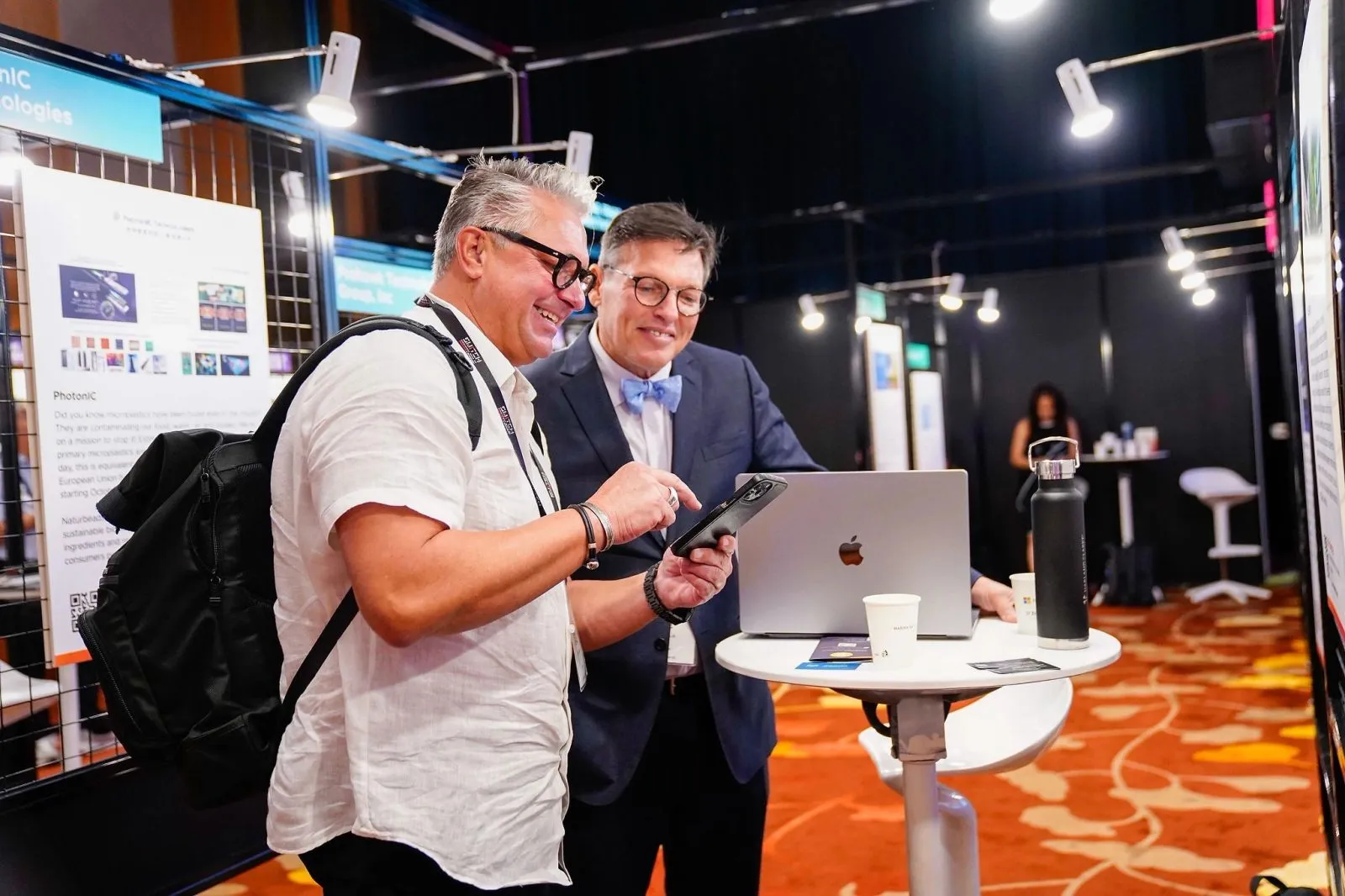
A web3 or crypto conference needs a photographer who can handle a run of show that changes on short notice, cover an on-chain announcement alongside a panel discussion, and turn around selects fast enough for a marketing team that posts within the hour. The crew arrangement is the same as any conference booking; what changes is the pace and the point of contact.
Key takeaways
- Web3 and crypto conference schedules shift later and more often than typical corporate agendas.
- One photographer can usually cover both an on-chain announcement moment and the panel sessions around it.
- The working contact on the day is often a community manager rather than a corporate comms lead.
- Marketing teams in this space post fast, so agree the delivery window before the event, not after.
- A brief with clear priority moments matters more here than a long shot list.
What makes web3 event schedules move faster than typical conferences
Corporate conferences in Singapore usually run to a printed agenda that holds within a few minutes. Web3 and crypto events are different. A keynote speaker joins by video call from another time zone and the slot moves. A partnership announcement gets held back for a market update. A side stage discussion runs long because the audience will not let a founder leave. None of this is disorganisation; it reflects a community that expects access and reacts to it live.
The practical effect on coverage is that a photographer working from a fixed shot list at fixed times will miss things. What works better is a photographer who stays close to the stage manager or organiser contact for the day, checks in between segments, and treats the printed agenda as a starting point rather than a script. This is closer to how conference photography is run for any fast-moving programme, just with a shorter fuse.
Covering on-chain announcements and panel sessions together
A typical web3 conference segment pairs a screen moment, a live transaction, a metric dashboard, a partnership reveal, with a panel discussion that follows or precedes it. Both need coverage, and they need different things from the photographer. The announcement moment wants a clean shot of the screen and the speaker together, timed to when the number or logo appears, not a second late. The panel wants natural audience reaction and speaker interaction shots that read well when cropped for a social post.
One photographer can do both if the run of show is briefed properly beforehand, including which slide or moment on screen is the one worth capturing. Where a second concurrent stage is running, a second photographer covers it directly rather than trying to split attention. This is the same crew-sizing logic used for any multi-track programme, covered in more detail in our guide on how many photographers a conference needs.
Working with community managers rather than a traditional comms team
The day-of contact for a web3 event is more often a community manager than a corporate communications lead. That changes what gets asked for. A community manager usually cares less about a formal executive portrait list and more about content that will perform on social channels within the hour: reaction shots, crowd energy, booth interactions, a founder mid-laugh rather than mid-podium.
It also means the brief conversation happens differently. Expect it over Telegram or a shared document rather than a formal call sheet, and expect priorities to be reprioritised close to the event as the programme firms up. A photographer used to corporate event photography can absolutely work this way, but it helps to say upfront that the point of contact will be a community or marketing lead rather than an executive assistant, so nobody is chasing the wrong person for approvals on the day.
Why some familiarity with the terminology speeds things up on the day
The photographer does not need to be a crypto expert. What helps is enough familiarity to recognise what is happening on stage, so the right moment gets captured rather than guessed at. Knowing that a token generation event, a mainnet launch or a partnership integration is the newsworthy beat of a segment, rather than the speaker introduction before it, changes where the camera points and when the shutter fires.
In practice this comes from a short pre-event briefing rather than deep subject expertise. Organisers who send through the agenda with a line or two on what each segment announces get noticeably better coverage of the moments that matter to their community, compared with a generic run sheet that just lists speaker names and times.
Delivery expectations for fast-moving crypto marketing content
Crypto and web3 marketing teams tend to post while the event is still live, not the next morning. That makes delivery speed a real requirement rather than a nice-to-have. On-site selects within the hour and a full gallery the same day, through EXPRESS 24, matches this pace far better than the standard 48-hour turnaround that suits a typical corporate recap.
Agree the delivery format in advance too. A marketing team usually wants a handful of high-resolution selects pushed to a shared folder as the event runs, not a single gallery link at the end of the day. Our guide to same-day event photography covers how that same-day workflow is structured for a fast news cycle.
Briefing the photographer for a schedule that can change
The single most useful thing an organiser can do is name the two or three moments that absolutely cannot be missed, and flag which parts of the agenda are likely to shift. A photographer who knows that the partnership announcement is the priority, even if it moves by thirty minutes, will stay near the stage and watch for it rather than wandering off for crowd shots at the wrong time.
It also helps to share a WhatsApp or Telegram contact for the day rather than relying on email. Web3 events run on messaging apps, and a photographer who can be pinged directly when a segment is about to start will capture more of what the community wants to see afterwards.
Questions organisers ask
Does the photographer need to understand crypto terminology in advance?
A working familiarity helps but deep expertise is not required. A short briefing on what each segment announces, such as a partnership, a launch or a metric update, is usually enough for the photographer to recognise and capture the newsworthy moment rather than a generic stage shot.
Can coverage adapt to a schedule that changes on short notice?
Yes, provided the priority moments are flagged beforehand. A photographer who knows which two or three segments matter most will stay close to the stage and adjust as the run of show shifts, rather than working strictly against a printed agenda that no longer matches reality.
Who is usually the point of contact for coverage during the event?
For web3 and crypto events this is often a community manager or marketing lead rather than a corporate communications team. Agreeing this contact before the event, along with a messaging channel such as WhatsApp or Telegram, avoids confusion when a segment moves at short notice.
How is content typically delivered for a fast-moving marketing team?
Selects are usually pushed to a shared folder while the event is still running, followed by a full same-day gallery, rather than waiting for a single link the next day. This matches the pace at which crypto and web3 marketing teams tend to post.
If you are organising a web3 or crypto conference in Singapore, send through the agenda and flag the moments that matter most to your community. Our conference photography team will work around a schedule that shifts, and quote a delivery pace that matches how fast your marketing team needs to post.
Related reading: Conference Photography Singapore · Event Videography Singapore · How Many Photographers Does Your Conference Need?.
More guides: Fast-turnaround video for a crypto exchange community meetup in Singapore · How to brief photography for a relaxed web3 community meetup · Covering a crypto exchange feature launch press event.
Let's talk
Planning an event in Singapore?
Send us the date, venue and programme. You will get a considered production plan and a fixed nett quote.